Showing posts with label science. Show all posts

Sunday, October 27, 2013

The Holy Ghost and Ohm's Law

In 1899 James E. Talmage, a renowned chemist in England and America and apostle in the LDS church, wrote a book titled 'The Articles of Faith' analyzing the doctrines laid out by Joseph Smith in a letter he wrote titled by the same name. Despite its age, it remains today one of the seminal works discussing Mormon Theology. From the section titled "The Holy Ghost", Talmage writes:

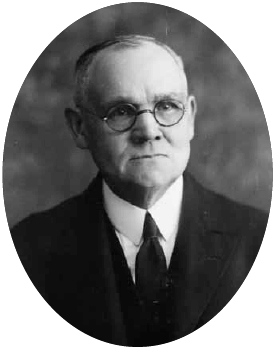
James E. Talmage (1862-1933)
Subtler, mightier, and more mysterious than any or all of the physical forces of nature are the powers that operate upon conscious organisms, the means by which the mind, the heart, the soul of man may be energized by spiritual forces. In our ignorance of the true nature of electricity we may speak of it as a fluid; and so by analogy the forces through which the mind is governed have been called spiritual fluids. The true nature of these manifestations of energy is unknown to us, for the elements of comparison and analogy, so necessary to our human reasoning, are wanting; nevertheless the effects are experienced by all. As the conducting medium in an electric circuit is capable of conveying but a limited current, the maximum capacity depending upon the resistance offered by the conductor, and, as separate circuits of different degrees of conductivity may carry currents of widely varying intensity, so human souls are of varied capacity with respect to the higher powers. But as the medium is purified, as obstructions are removed, so resistance to the energy decreases, and the forces manifest themselves with greater intensity. By analogous processes of purification our spirits may be made more susceptible to the forces of life, which are emanations from the Holy Spirit. Therefore are we taught to pray by word and action for a constantly increasing portion of the Spirit, that is, the power of the Spirit, which is a measure of this gift of God unto us.

Talmage is drawing an analogy from Ohm's law which was widely accepted by the scientific community some 50 years before Talmage had this insight. Having studied the physics covering electromagnetism myself, this idea brought back many memories of working through simple circuit diagrams with voltage, intensity, and resistance. The relationship between these three values is expressed in Ohm's law:

Here, the intensity of current in a circuit (measured in amps) is equal to the voltage (electrical potential) of a power source divided by the resistance of the medium through which that current flows. The greater the voltage the greater the current. However, the greater the resistance the less current. By analyzing this equation and see what insights it gives drawing from Elder Talmage's analogy above, much can be learned.

In the Book of Mormon Alma chapter 30 gives an account of a trail between the high priest, Alma, and Korihor who had been accused of blaspheme. After Korihor insists that a sign must be given before anyone should exercise faith, Alma responds:

Behold, I am grieved because of the hardness of your heart, yea, that ye will still resist the spirit of the truth, that thy soul may be destroyed.

Alma 30:46

Sometime later, Alma - in preaching to the poor and rejected class of the Zoramites - makes a wonderful analogy between the word of God and a seed. Here, he also uses the word 'resist' when speaking of wickedness and hardheartedness (possibly referring to his previous encounter with Korihor):

Now, we will compare the word unto a seed. Now, if ye give place, that a seed may be planted in your heart, behold, if it be a true seed, or a good seed, if ye do not cast it out by your unbelief, that ye will resist the Spirit of the Lord, behold, it will begin to swell within your breasts; and when you feel these swelling motions, ye will begin to say within yourselves—It must needs be that this is a good seed, or that the word is good, for it beginneth to enlarge my soul; yea, it beginneth to enlighten my understanding, yea, it beginneth to be delicious to me.

Alma 30:28

In modern times, Christ - speaking to Lyman Sherman through Joseph Smith - in December 26, 1835 -  spoke similarly:

... resist no more my voice.

D&C 108:2


In basic circuits, to which this analogy relates to, the voltage is constant. That constant voltage relates to God and his power which is described as "... the same yesterday today and forever..." (1 Ne. 10:18). God's power is always there, available to anyone, and it's potential is unchanging.

Given the voltage is constant, the resistance becomes the determining factor for the intensity in the circuit. Likewise, as God's power is constant, unchanging, and is always extended towards each one of His children, our will compared to His becomes the determining factor of the efficacy of that power flowing through our lives. Again from the above Talmage quote:

.... as the medium is purified, as obstructions are removed, so resistance to the energy decreases, and the forces manifest themselves with greater intensity.

So, what is the resistance that is required to allow God's power to more fully flow through us? It, surprisingly, is not zero given the equations above. If a resistance of zero, or analogously an empty will, is introduced to the equation impossible or undefined results are found. Such is life without free will or with an empty will (see 2 Ne. 2:11-13). Could this begin to describe the situation where Satan sought to deny the power of God and place Himself above it by destroying the agency of man (see Moses 4:3)?

So, if having zero resistance introduces problems in the equation and the analogy then what should "R" ideally be? To answer the question it helps to rearrainge Ohms law.


What would "R" have to equal in order for "V" and "I" to equal each other?" The resistance would have to be 1. While trying to avoid taking the analogy too far, the notion of "one" has great implications in the gospel and appears throughout it. The term "one" appears frequently in scriptures to indicate harmony, alignment, equality, and unity. The Lord has said:

... I say unto you, be one; and if ye are not one ye are not mine.

D&C 38:27

It is especially prominent in the Lord's Intercessory Prayer:

20 Neither pray I for these alone, but for them also which shall believe on me through their word;

21 That they all may be one; as thou, Father, art in me, and I in thee, that they also may be one in us: that the world may believe that thou hast sent me.

22 And the glory which thou gavest me I have given them; that they may be one, even as we are one:

23 I in them, and thou in me, that they may be made perfect in one; and that the world may know that thou hast sent me, and hast loved them, as thou hast loved me.


Knowing and understand this, it becomes quite clear that the only way the power of God will flow through us is if we choose to become one--harmonizing and aligning our desires and actions with the will of God. Only when this oneness is achieved will the power of God flow through us unobstructed. Nephi (the second) achieved, to some degree, this oneness. Nephi, pondering upon the wickedness of the people at the time, heard the voice of the Lord saying:

4 Blessed art thou, Nephi, for ... thou hast ... sought my will, and to keep my commandments.

5 And now, because thou hast done this with such unwearyingness, behold, I will bless thee forever; and I will make thee mighty in word and in deed, in faith and in works; yea, even that all things shall be done unto thee according to thy word, for thou shalt not ask that which is contrary to my will.

Helaman 10:4-5

Through God's blessing, Nephi's righteousness and unity lead to receiving great power from heaven. And we too can be given power as we align our will with the will of God. The means through which this power is given is through the Holy Ghost, but it is activated through the gift of the atonement. It is of no coincidence that the word "atonement", influenced by the Latin word adunamentum meaning 'unity', came from an older verb "onement" meaning "to unite" or "make one".

This is how we harness and utilize the gift of the Holy Ghost. As a gift and blessing, it is predicated upon obedience (D&C 130:20-21; D&C 132:5). And it is only when our will becomes one with the will of God, through the atonement of Christ, that we may be blessed with His eternal power.

Tuesday, July 30, 2013

There are more things that are true than are provable.

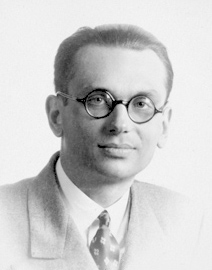
Kurt Gödel
We live in a world where faith is often belittled as a lesser virtue. I hope to write a series of posts detailing how faith is in fact a necessary virtue from which not only religion but also logic, morality and science itself depend on. Furthermore, I hope this series helps the reader see why even the great atheist philosopher Friedrich Nietzsche admitted:
Only if we assume a God who is morally our like can “truth” and the search for truth be at all something meaningful and promising of success. This God left aside, the question is permitted whether being deceived is not one of the conditions of life.
Or why the renowned philosopher Immanuel Kant argued that "logic, morals, and science ultimately presuppose a Christian theistic worldview".  Just to be clear, the point of these posts are not be to "prove" God exits but only to suggest that faith in something like God is actually necessary to make sense of reality religiously, logically, morally and even scientifically.

The point of this first post is to show that everyone must accept at least this minimal version of faith: that there are more things that are true about reality than are provable.  This is not some nice philosophical hope but a mathematical fact shown by Gödel's two incompleteness theorems discussed below.

Thus if someone ever tells you that that they don't believe faith is necessary because eventually science, logic and reason can prove all things, you can know this claim has been shown to be false by Gödel.  In fact, it is very interesting to me we find ourselves in a world where only worldviews that admit faith in truth beyond provability are possibly valid.

Gödel's first incompleteness theorem: there are more things that are true than provable. 

First, let's formally state Gödel's first incompleteness theorem:
Any effectively generated theory capable of expressing elementary arithmetic cannot be both consistent and complete. In particular, for any consistent, effectively generated formal theory that proves certain basic arithmetic truths, there is an arithmetical statement that is true, but not provable in the theory (Kleene 1967, p. 250)
Which means: if you have any consistent theory that is strong enough to account for elementary arithmetic, it cannot actually prove the truth of all things. (Be complete)  In other words, no matter how smart, well-thought out and sophisticated your theory will ever be, if it is strong enough to account for elementary arithmetic and consistent, it will fail at demonstrating the truth of all things.  In fact, there will literally be an uncountably infinite number of things about reality that are true, but that your theory will fail to demonstrate no matter how long or hard anyone tries.

One good lay resource on this subject is the Pulitzer Prize winning book Gödel, Escher, Bach in which Hofstadter writes:
In short, Gödel showed that provability is a weaker notion than truth, no matter what axiomatic system is involved.
Gödel's second incompleteness theorem: one must have faith that logic itself isn't inconsistent. 

Now we turn to Gödel's second incompleteness theorem that states formally:
For any formal effectively generated theory T including basic arithmetical truths and also certain truths about formal provability, if T includes a statement of its own consistency then T is inconsistent.
This second theorem takes the necessity of faith one step further. Not only will a theory, sufficient to account for arithmetic, fail to be complete (not be able to prove all truths) but one can never even know that the theory itself is consistent! Because, as the statement concludes, any sufficiently complex theory that claims to be consistent must actually be inconsistent.

This means, as much as we love our mathematically based theories about reality, we can never know they are actually consistent. To accept them we must accept them based on faith. (Something we believe to be true but can never prove for certain.)

Some possible examples of things that may be true but not provable:

Saying there are things that are true but not provable is nice in the abstract sense, but it is helpful if some concrete examples can be given.

  • Free will - There have been many philosophers, including the renowned Princeton mathematician John Conway in his video lectures here, that have shown that if free will is true, it cannot be known by proof.  If you believe you have control over your thoughts and actions independent of determinism you must have faith in that. You can never prove it is actually true.
  • Morality - If morality is true, you cannot know the truth of the matter from any scientific theory or proof. The respected philosopher David Hume pointed to this in his famous "is-ought" problem where he showed you can never derive "ought" (morality) from "is" (any scientific theory). Einstein further agrees and has observed one "cannot... speak of the scientific foundations of morality... every attempt to reduce ethics to scientific formulae must fail."
  • Hawking's admission with science - Every once and a while someone tries to claim that Gödel's theorem only applies to the integers but this is not true. In fact even the great Stephen Hawking, a noted physicist and atheist, admitted in his talk Gödel and the End of the Universe that even science will forever be incomplete due to Gödel's theorems. 
  • Up to now, most people have implicitly assumed that there is an ultimate theory that we will eventually discover. Indeed, I myself have suggested we might find it quite soon... [However] a physical theory is self referencing, like in Gödel's theorem. One might therefore expect it to be either inconsistent or incomplete... Some people will be very disappointed if there is not an ultimate theory that can be formulated as a finite number of principles. I used to belong to that camp, but I have changed my mind.
  • The halting problem in computer science - In addition to physics, Gödel's theorem creates an un-solvable problem in computer science known as the halting problem.  There are some computer programs you can show will complete in a finite number of steps. Others you can show will run forever. (Like an infinite loop) The halting problem says there will always be an infinite number of programs that no matter how hard we try we can never prove if they run forever or halt in a finite time. (Hence a truth beyond proof.)
  • Mathematical theorems like possible Goldbach's conjecture - In his talk linked above, Hawking uses the Goldbach's conjecture as a concrete example of a mathematical statement that may be beyond proof.

    Goldbach's conjecture is simply this: "Every even integer greater than 2 can be expressed as the sum of two primes." That statement is actually either true of false and it or mathematical statements like it may be concrete examples of truths beyond provability.
  • The consistency of mathematics and logic itself - I already discussed this above following from Gödel's second theorem but it is worth mentioning again, especially because by the second theorem it must itself be one of the unprovable truths. If we want to adopt principles of logic and mathematics sufficiently strong enough to account for arithmetic, we are forced to confess the consistency of our logic and math will forever remain beyond our ability to prove!
In conclusion: Any worldview that claims that all truth can be known by science, logic or reason is a woldview that has been mathematically disproven.  The only worldviews that have a chance of being valid are those that are those that adopt faith: a willingness to believe in truth that is beyond provability.  I find this fact about reality fascinating! A fact that is profound enough that I think it would do people good to contemplate it's deep implications. Implications that tell hint at, among other things, that faith is in fact a necessary virtue.